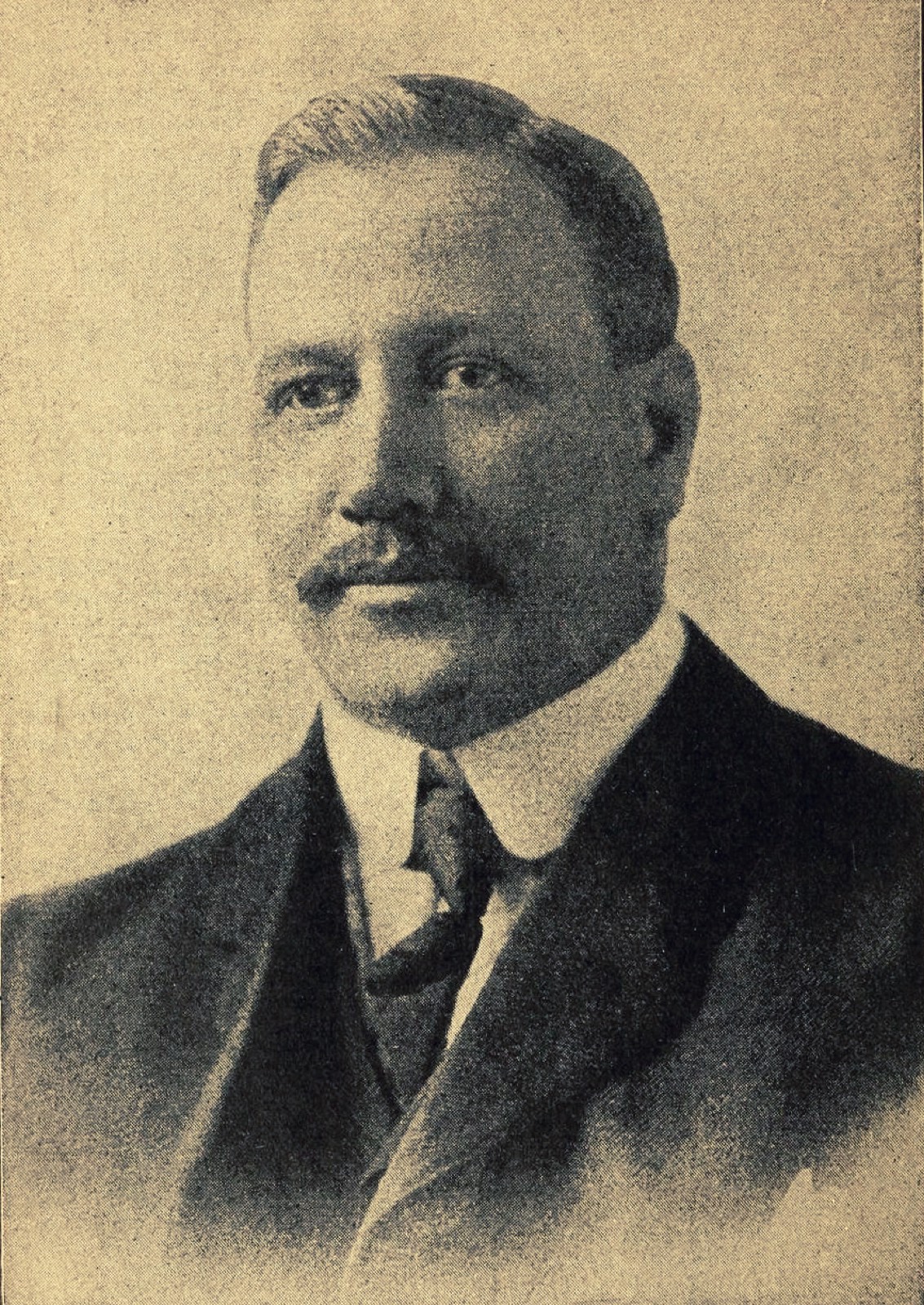
Above: William G. Morgan, volleyball's inventor (public domain). Holyoke, Massachusetts, in the 1890s was a mill town that ran on paper and river water. Its businessmen worked long hours, ate heavy lunches and, by the middle of winter, were going a little soft. They wanted exercise. What they didn't want was basketball.
Basketball was brand new then, invented only a few years earlier and a few miles down the road in Springfield. It was fast, sweaty and full of collisions, great for young men and miserable for a forty-five-year-old bookkeeper with a bad knee. The physical director of the Holyoke YMCA, a 25-year-old named William G. Morgan, saw the problem every week. So he started tinkering.
A young man from the right school
Morgan wasn't a random gym teacher. He'd studied at the International YMCA Training School in Springfield, the college now known as Springfield College, where the man who invented basketball, James Naismith, was on the staff. The whole place was a kind of laboratory for new indoor sports. Morgan absorbed the idea that a good game could be designed, not just inherited.
When he moved to Holyoke and started running classes for older members, he went looking for something with less running, less contact and more fun. He borrowed ideas from tennis, from handball and from a few other games, and started putting them together in the gym.
The tennis net that didn't work, and the one that did
The first problem was the net. A tennis net was too low: players could slap the ball down onto each other. So Morgan raised it, stringing it at about six feet six inches, just above the head of an average man of the time. That one change created the whole shape of the game. The ball had to go up and over, which meant it stayed in the air, which meant rallies.
The second problem was the ball. He tried the rubber bladder from inside a basketball, and it was too light and too slow, floating around like a balloon. A full basketball was too big and too heavy for hitting with bare hands. Morgan eventually asked the sporting goods firm A.G. Spalding & Bros. to make something in between. The leather ball they produced was much closer to what we'd recognise today.
Raise the net above everyone's head, and suddenly a game about hitting becomes a game about keeping the ball alive.
So why "Mintonette"?
Morgan called his game Mintonette. Nobody is quite sure why. The most popular guess is that it nodded to badminton, which also sent something over a high net. It's a rather dainty name for a sport now associated with 120-kilometre-an-hour spikes. You can imagine the businessmen of Holyoke saying it with a little embarrassment.
The early rules were loose and very different from today's:
- Any number of players could take part, so long as the sides were equal.
- A match was divided into nine "innings," a borrowing from baseball, with each player serving in turn.
- The server got a second try if the first serve failed, as in tennis.
- The court was about 25 by 50 feet, small enough to fit in an ordinary gym.
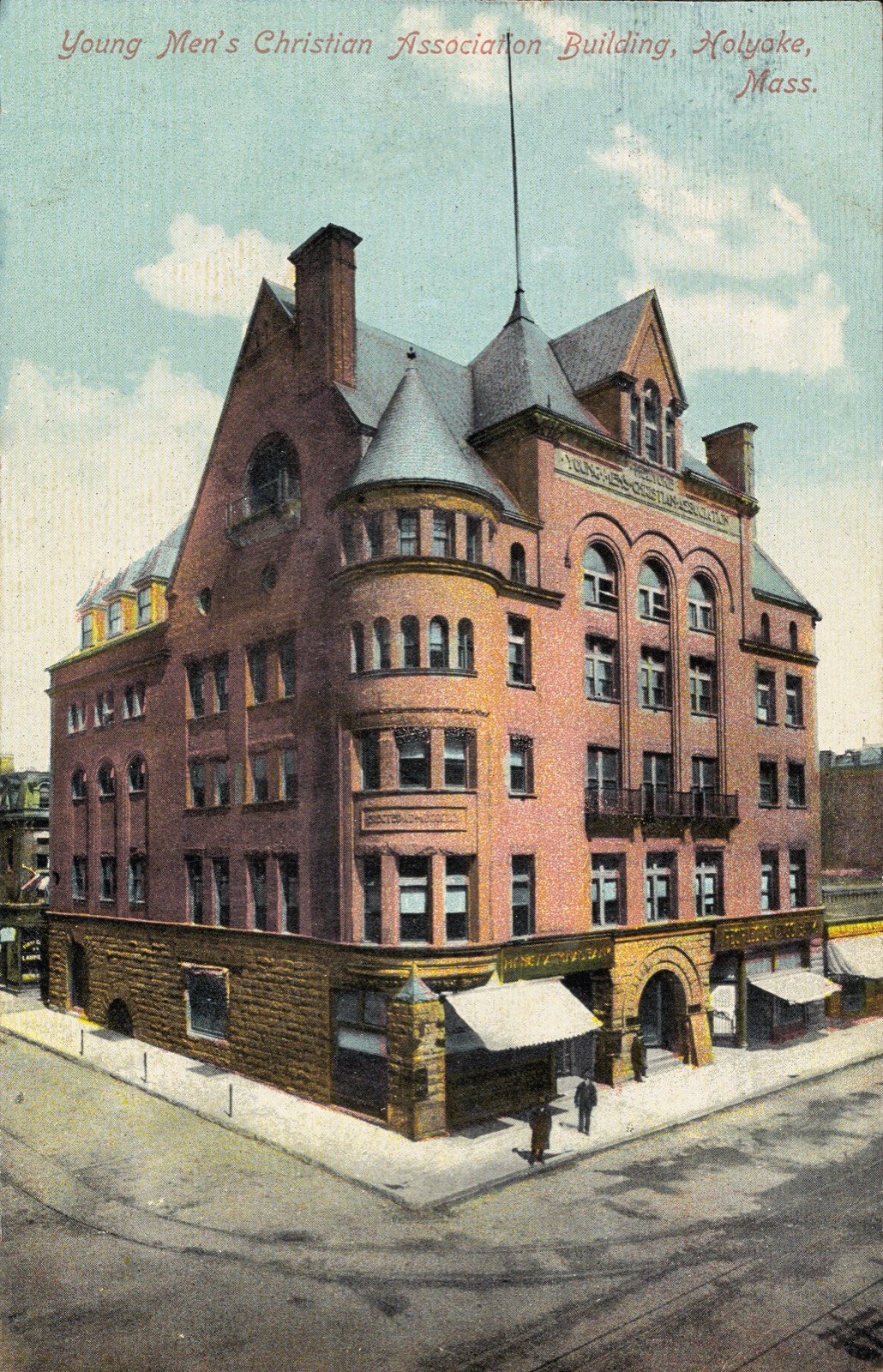
Springfield, 1896: the demonstration that renamed it
In 1896, Morgan was invited to show his game at a conference of YMCA physical directors at the Springfield school. He brought two teams of five men from Holyoke, reportedly including the town's mayor and fire chief, and they played an exhibition in front of the professionals.
Watching was a professor named Alfred T. Halstead. He pointed out that the whole idea of the game was to volley the ball back and forth over the net before it hit the ground. Why not call it "volley ball"? The name stuck immediately. It was written as two words for decades. USA Volleyball's predecessor officially adopted the single word "volleyball" in 1952.
What Morgan got right
It's worth stepping back for a moment, because Morgan's design choices were smart in ways that still matter:
- No contact. The net separates the teams completely, so nobody gets tackled. That made it suitable for all ages and, later, for mixed and women's play from the start.
- Small space. It needs nothing but a rectangle, a net and a ball, which is why it spread so easily into church halls, army camps, schoolyards and beaches.
- Teamwork. Because the ball can't be held, nobody can hog it. Even in its earliest form it forced players to cooperate.
Those three features explain most of what happened next. The YMCA network carried volleyball to every continent within a few decades, which is the subject of our next story.
Holyoke remembers
Morgan himself never got rich from his invention, and he spent most of his later life in business in Lockport, New York. He died in 1942. Holyoke has never forgotten him. The city is home to the International Volleyball Hall of Fame, and Morgan was, naturally, its first inductee. If you drive up from New York City, it's an easy three-hour trip and a lovely detour for any fan.