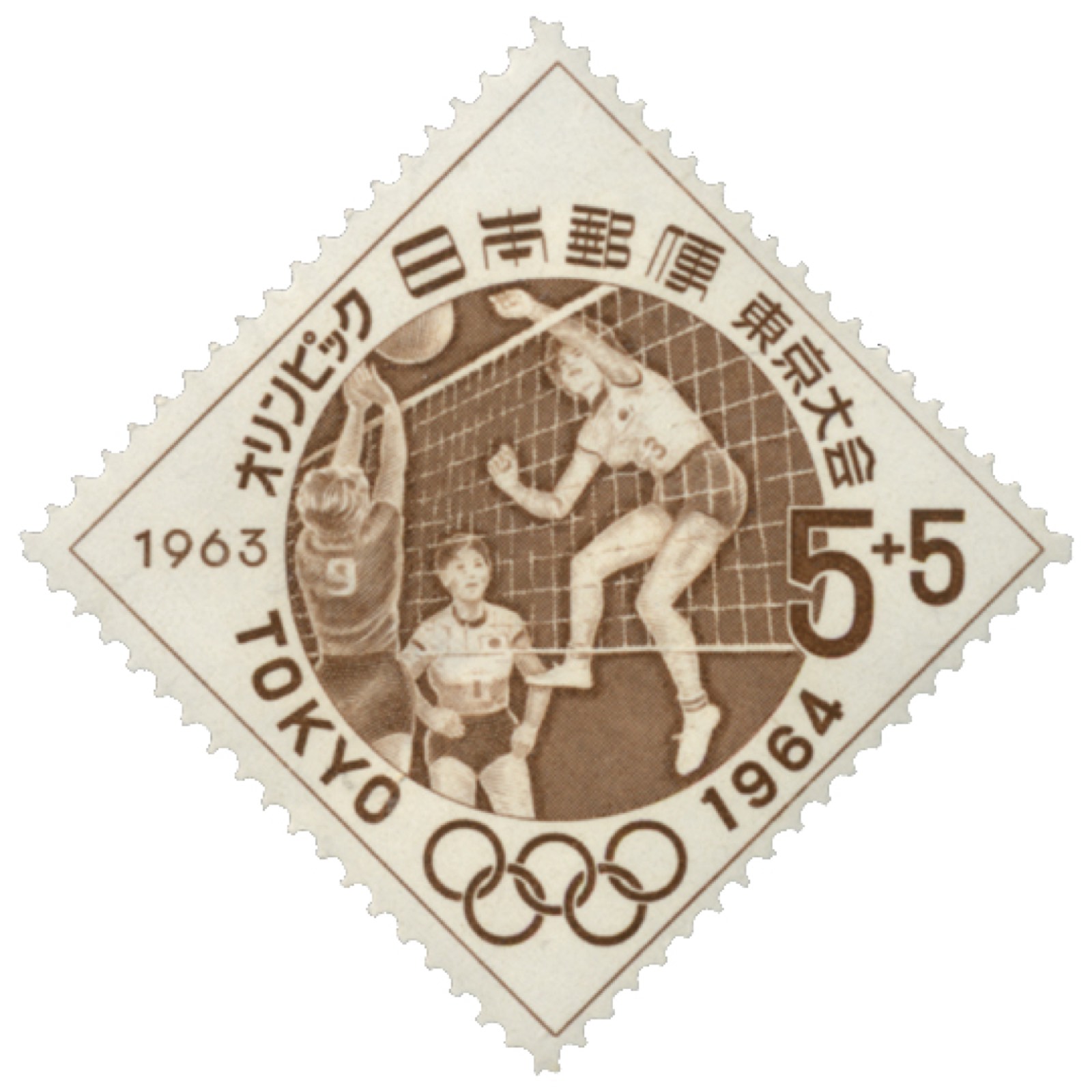
Above: Japan's commemorative stamp for volleyball at the 1964 Tokyo Olympics (public domain). In October 1964, Japan hosted the first Olympic Games ever held in Asia. The country was showing the world how far it had come since the war, with bullet trains, new expressways and gleaming arenas. And yet, for many Japanese people, the moment they remember best from those Games wasn't a ceremony or a stadium. It was a volleyball match between a team of young women from a textile factory and the mighty Soviet Union.
Volleyball joins the Olympics
Volleyball had been campaigning for Olympic status for years, and Tokyo was the obvious place to begin. The sport was hugely popular in Japan, and the host country could add it to the programme. Both a men's and a women's tournament were held. Women's volleyball was among the very first team ball sports for women at the Olympics, which gave the event extra weight.
A factory team
The core of Japan's women's team came from a single company team: the textile maker Nichibo, at its mill in Kaizuka near Osaka. Japanese companies ran sports clubs for their workers, and Nichibo's volleyball team had become extraordinary. Many players worked shifts at the mill and trained for hours afterwards, late into the night, almost every day of the year.
Their coach was Hirobumi Daimatsu, a former army officer who had survived the war in Southeast Asia. His methods were legendarily harsh. The press called him "Demon Daimatsu." His training sessions were long, repetitive and physically punishing, with players diving again and again for balls he hit at them. He also developed a defensive technique that became the team's trademark: the kaiten ("rolling") receive, where a player dives to dig the ball and turns the fall into a roll so she can spring straight back up.
Nobody had seen defence like it. Balls that should have hit the floor kept coming back.
"Witches of the Orient"
Japan's women had already shocked the volleyball world in 1962 by winning the World Championship in Moscow, beating the Soviet team on its home court. European journalists, baffled by their speed and defence, nicknamed them the "Witches of the Orient." It was a strange compliment, but it stuck, and in Japan the name became a badge of pride.
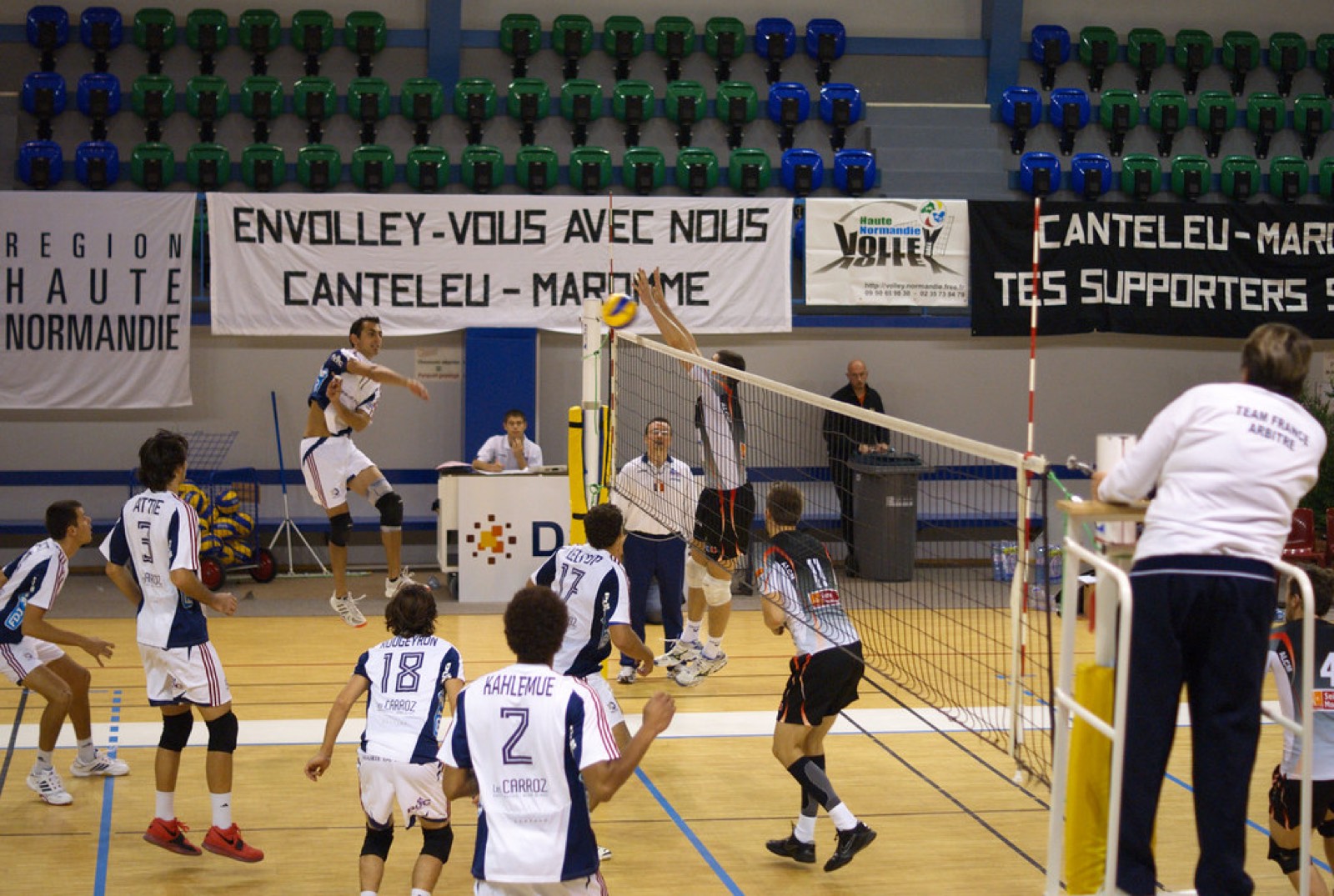
The final: 23 October 1964
The women's tournament was a round robin, and it came down to a match between Japan and the Soviet Union at the Komazawa Volleyball Courts. Japan won 3–0. The final set was tight and tense, and the winning point reportedly came from a Soviet fault, which only added to the drama.
Japanese television had a vast audience that evening. The broadcast is often cited as one of the most-watched programmes in Japanese history, with the commonly quoted rating putting it at around two-thirds of households. Streets emptied. People who'd never followed volleyball before gathered around televisions in shops and homes.
Why it mattered so much
The win meant more than a medal. Coming less than twenty years after the end of the war, it gave Japan a moment of shared joy on its own soil. The players, ordinary working women from a mill, became national heroines. Their story also changed volleyball itself. Teams around the world studied Japanese defence, speed and training. The idea that hard work and clever technique could beat height and power spread far beyond Japan.
The men's tournament in 1964 was won by the Soviet Union, with Czechoslovakia second and Japan third. Japan's men later took gold in Munich in 1972, built on quick, inventive attacking play.
Legacy
The story of the Nichibo players has been told in Japanese documentaries, books and dramas, and in the English-language documentary film The Witches of the Orient (2021). Volleyball remains one of Japan's most popular sports, at schools, in company leagues and in its professional league. And whenever a defender somersaults out of a dig and springs back into play, she's echoing a team that trained in a mill gym near Osaka.